
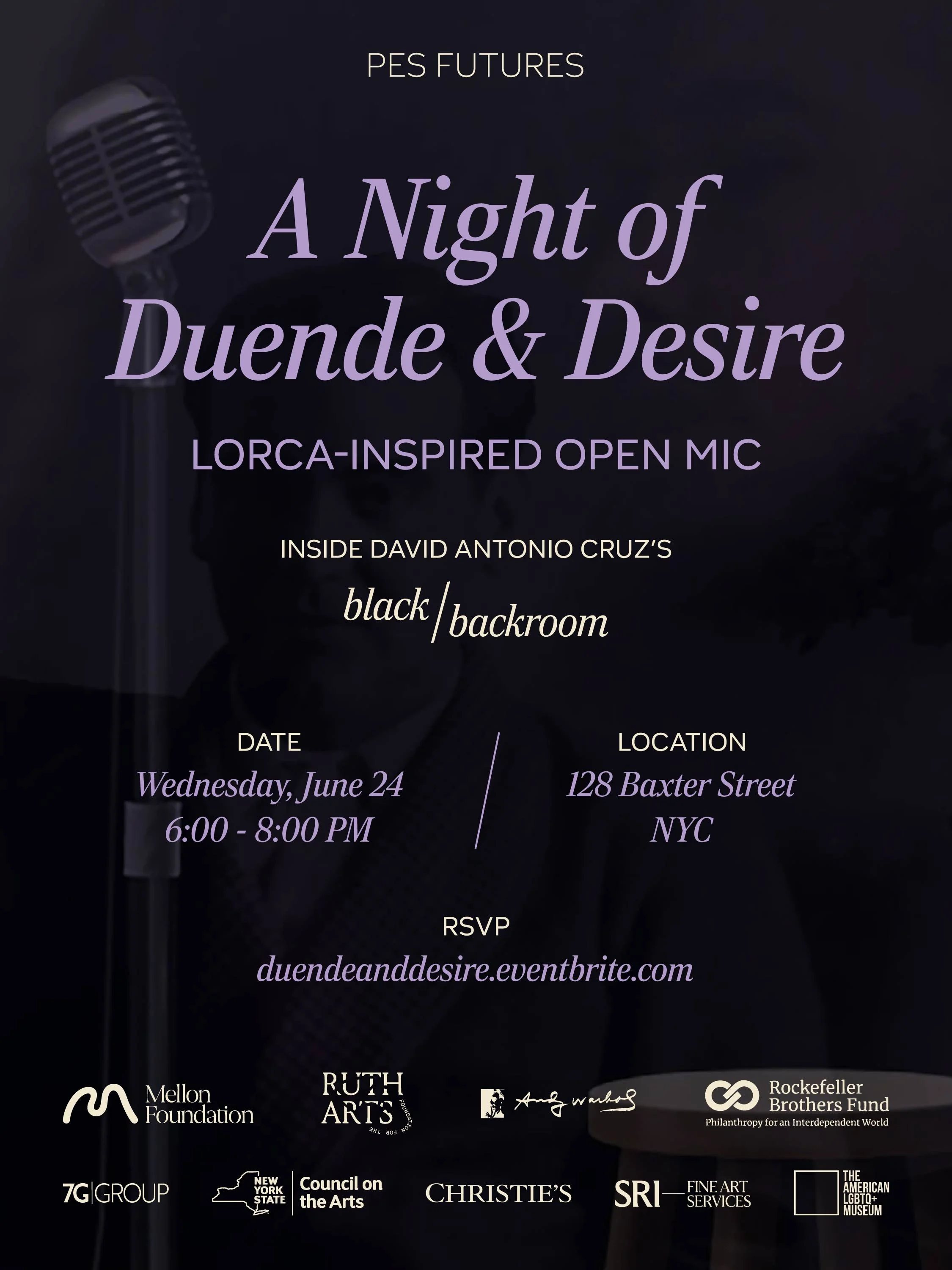
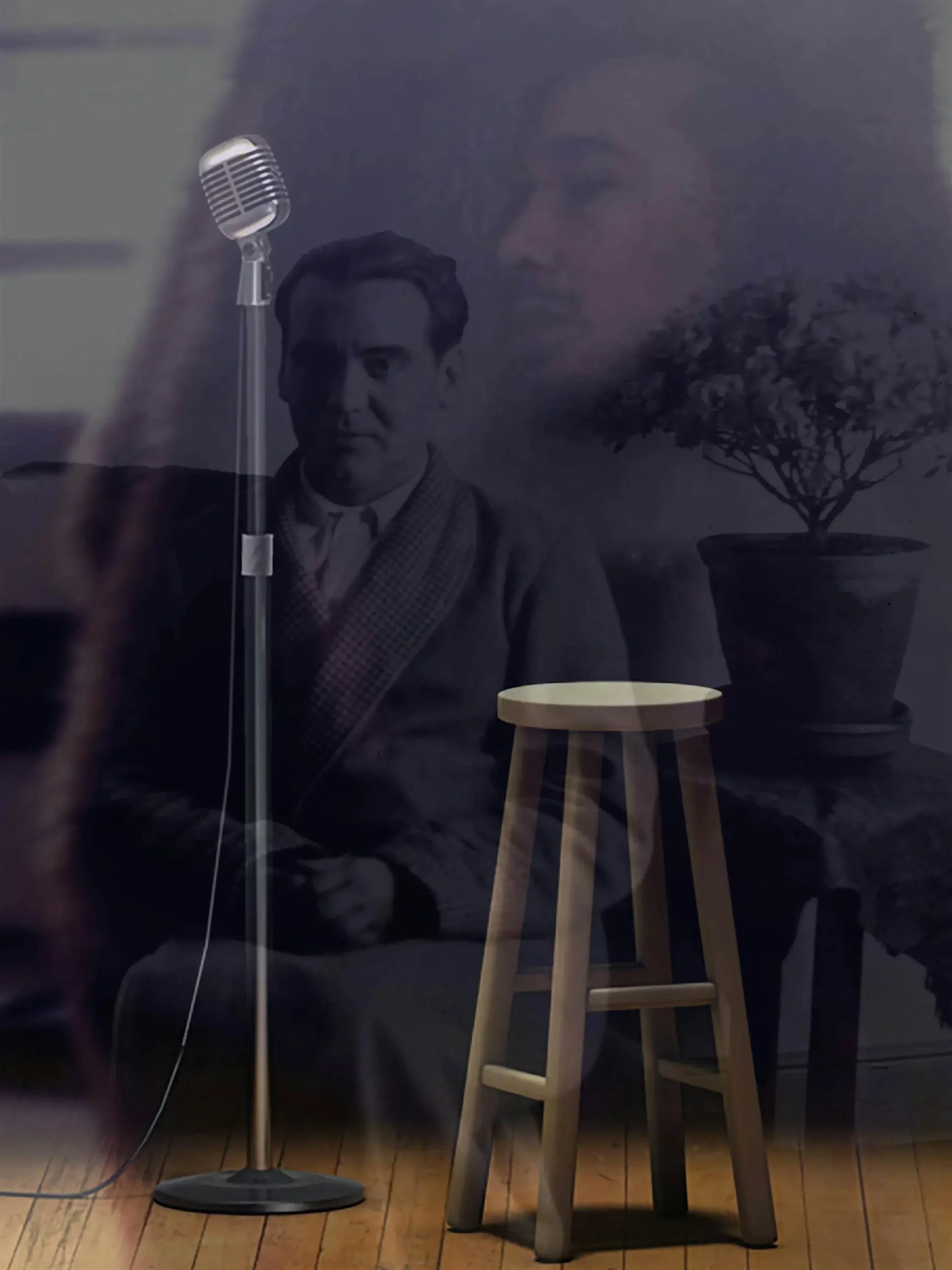
A Night of Duende & Desire: Lorca-Themed Open Mic Night
Wednesday, June 24, 6-8 PM
Join us for “A Night of Duende and Desire,” a poetry reading and open mic night inspired by Federico García Lorca and David Antonio Cruz in collaboration with The American LGBT+ Museum.
Drawing from the oeuvre of one of Cruz’s principal inspirations, Federico García Lorca, the Lorca open mic night will give participants an opportunity to critically engage with the work of the Spanish poet, exploring its ties to black/backrooms, and its themes of loss, desire and diasporic legacy. Following a poetry reading of works selected by Cruz, participants will be presented with the opportunity to take the stage themselves, performing texts related to cruising, code-switching, and gender expression.
In engaging with the thematic ties between the ouvres of Lorca and Cruz, “A Night of Duende & Desire” will provide a communal space to unpack the parallels between queer life in the tumultuous landscape of 1920s Spain and present-day America.
Participating poets will be asked to reserve a 5-minute timeslot to perform a work addressing one or more of the following themes: voyeurism, private passion, and the relationship between queerness and theocracy.
Due to the nature of this event, we encourage interested individuals to RSVP for a performance slot HERE.
About the Exhibition:
David Antonio Cruz’s black/backroom at PES Futures considers future-making through the lens of both personal and collective historical precedence. As part of a continuation of Cruz’s unveiling of Queer-Brown-Histories, the artist shapes potentialities through intersecting themes of loss, desire, and the legacy of Cruz's grandparents' land- Puerto Rico.
The immersive exhibition, which was created for the intimate Chinatown gallery, draws on various aspects of Cruz’s interdisciplinary practice in a beautifully maximalist manner. Viewers are enveloped in a detailed wallpaper that features ghostly layered images flora from important geographies in the artist's life- Philadelphia, Puerto Rico, and New York. These hidden histories and vignettes lead to a surprise element tucked in the back of the space, inviting viewers to rest and recline. The installation crescendos around a cacophony of chandeliers, a relatively new symbolic element in Cruz’s lexicon, reflecting abundance, decadence, and splendor. Embedded within the chandeliers are small sculptural objects that symbolize intimate narratives.